

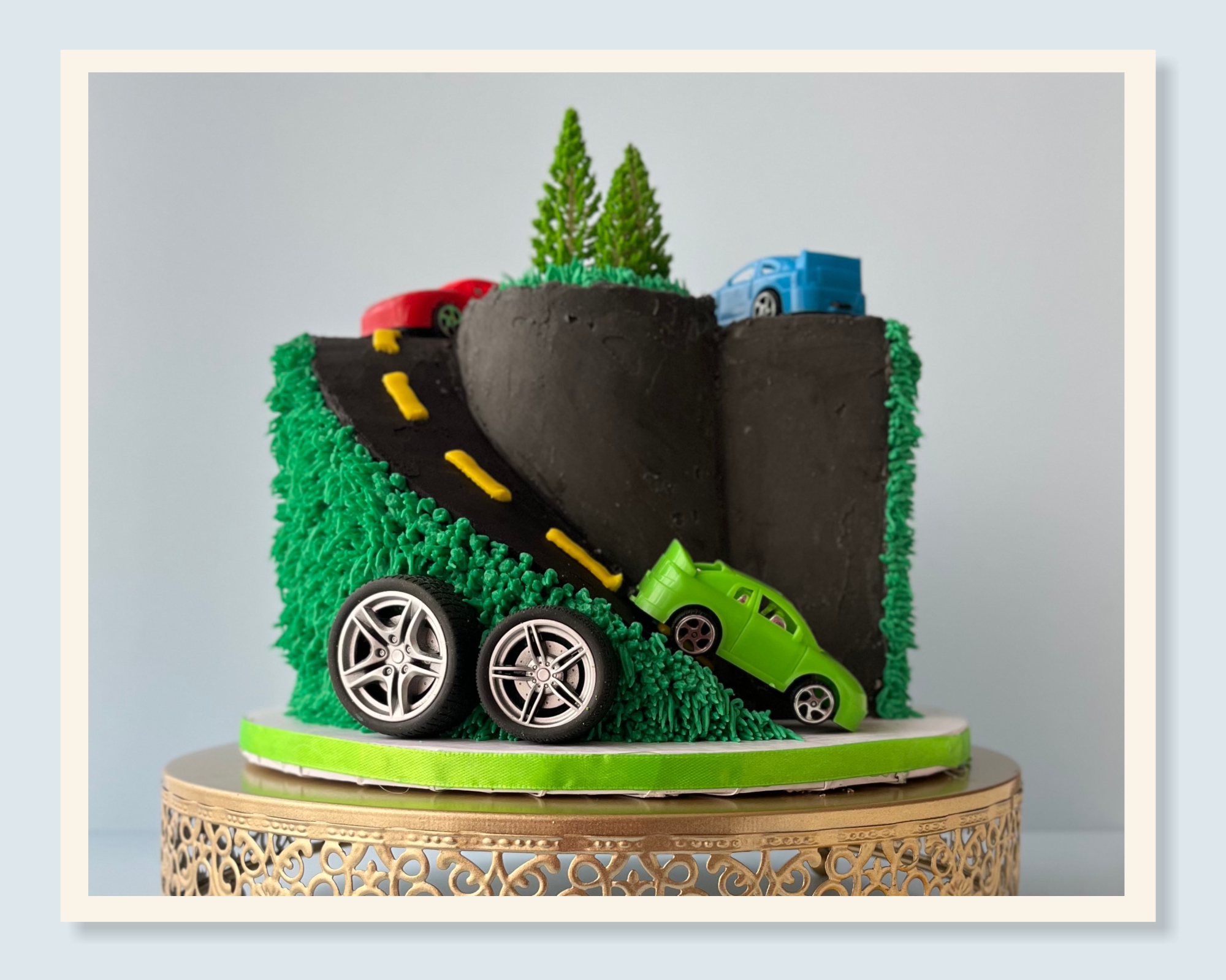
Let Your Cake Live: The Cake Design Process
Jennifer Sparks is the designer and maker behind JL Cake & Chocolate, where each piece begins with an idea and is shaped into something intentional.
Her work began with gluten-free baking out of necessity and continues to be created entirely within that space — informing both structure and design.
Let Your Cake Live is where that work unfolds — exploring the thinking behind each piece, from concept to final moment.
follow

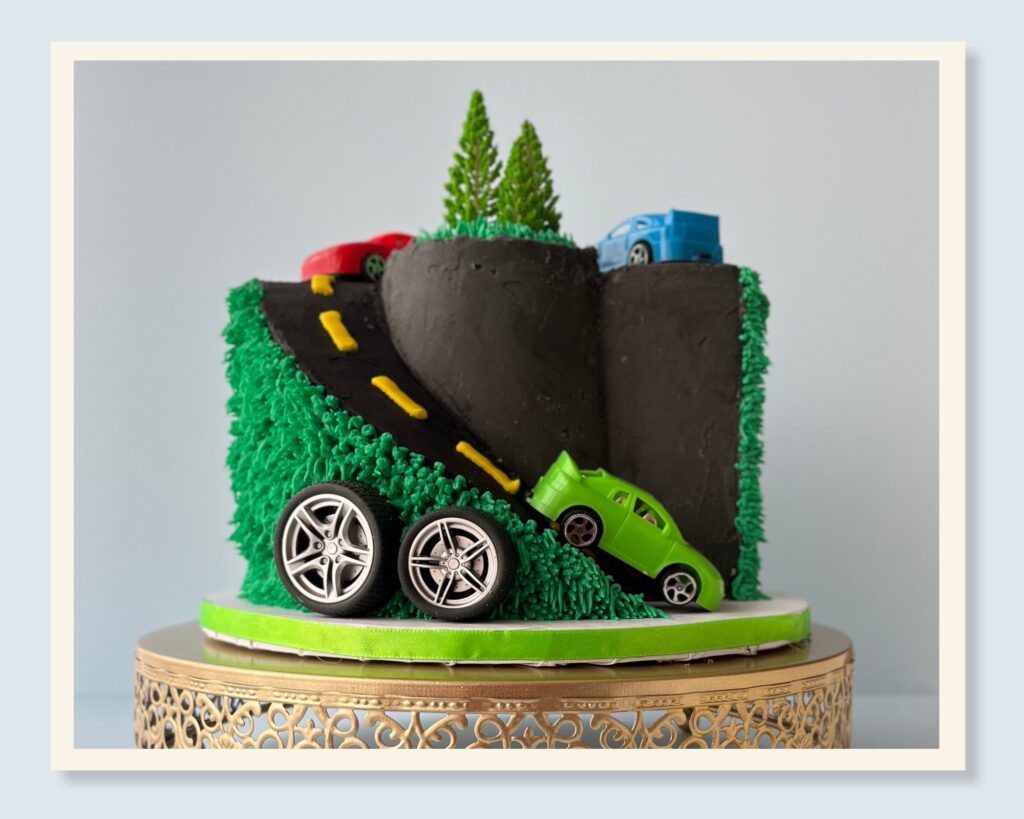
The cake design process often begins with a simple brief.
Sometimes the brief is simple — and that’s where the real work begins.
Chocolate cake.
Cars.
But there was one important constraint from the start:
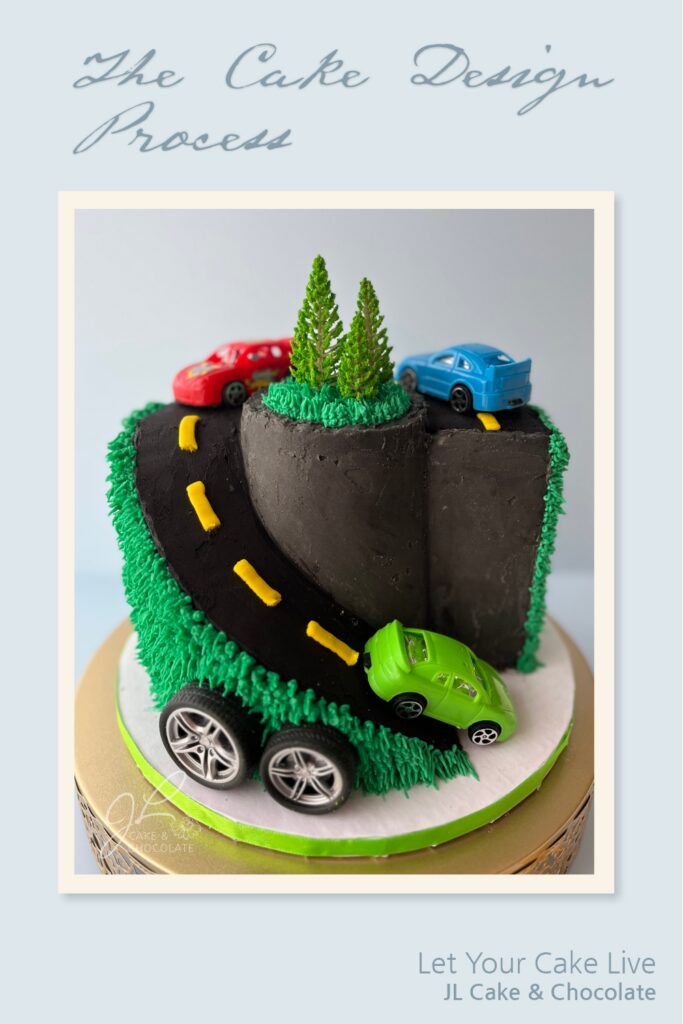
This was not to be a carved car.
It was to be a cake about cars.
That distinction mattered.
In This Post
Where the Idea Shifted
With no specific type of car requested — not even race cars — the question became:
Where do cars naturally exist?
A road.
That decision changed everything.
A road brings movement. It creates direction. It adds a sense of play.
A parking lot would have technically worked — but it wouldn’t have felt the same.
This is where the cake design process begins — not with decoration, but with choosing the right setting.
This is often the difference between a cake that simply meets a brief and one that actually feels considered. The decision changes everything that follows.
Designing Within Constraints
The next decision wasn’t visual — it was structural.
The road needed to be wide enough to hold the topper cars I had purchased.
At the same time, I wanted as much road as possible without compromising the cake’s integrity.
I also wanted to avoid dowels if I could.
This was a child’s cake — safety mattered.
So the design had to hold itself.
Translating to a Real Cake
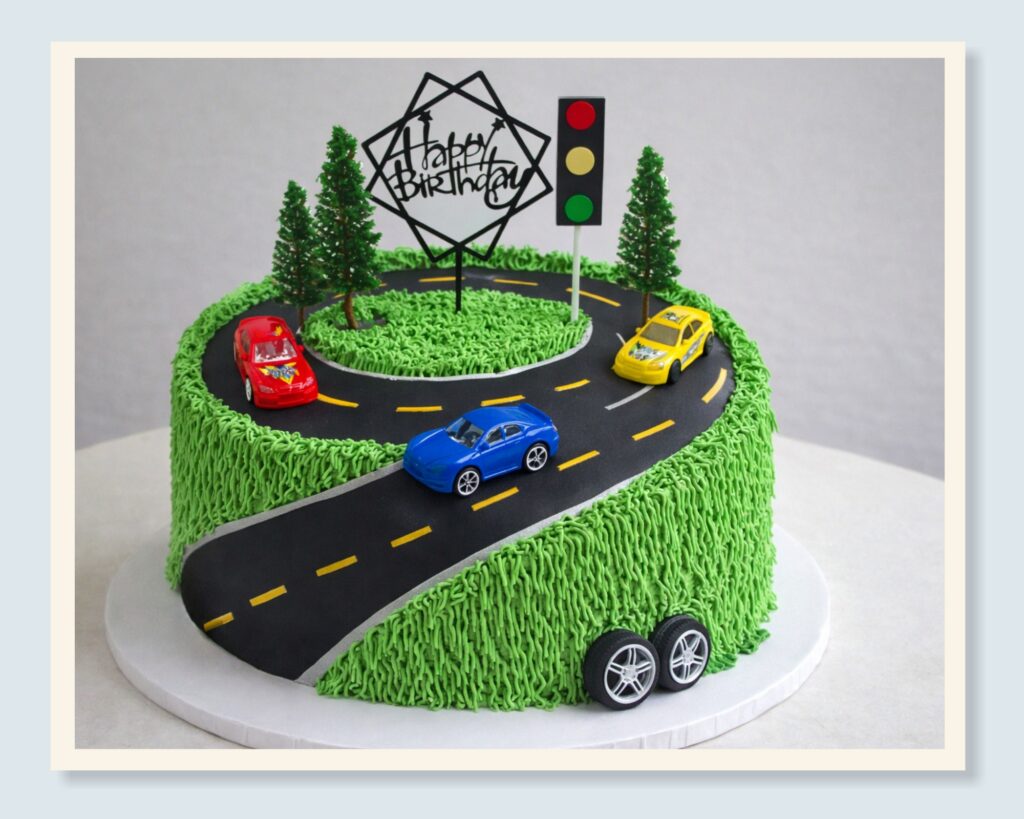
The AI image provided a direction — but it wasn’t a finished plan.
Moving from a flat concept into a 3D cake always requires adjustment.
In this case, I relied on experience from previous carved cakes — particularly mountain slope designs — to determine how the road could realistically move through the cake.
Carving is always a bit of a commitment.
There’s a moment where you decide to trust your judgement and move forward anyway.
That confidence only comes with time.
The Role of the Centre
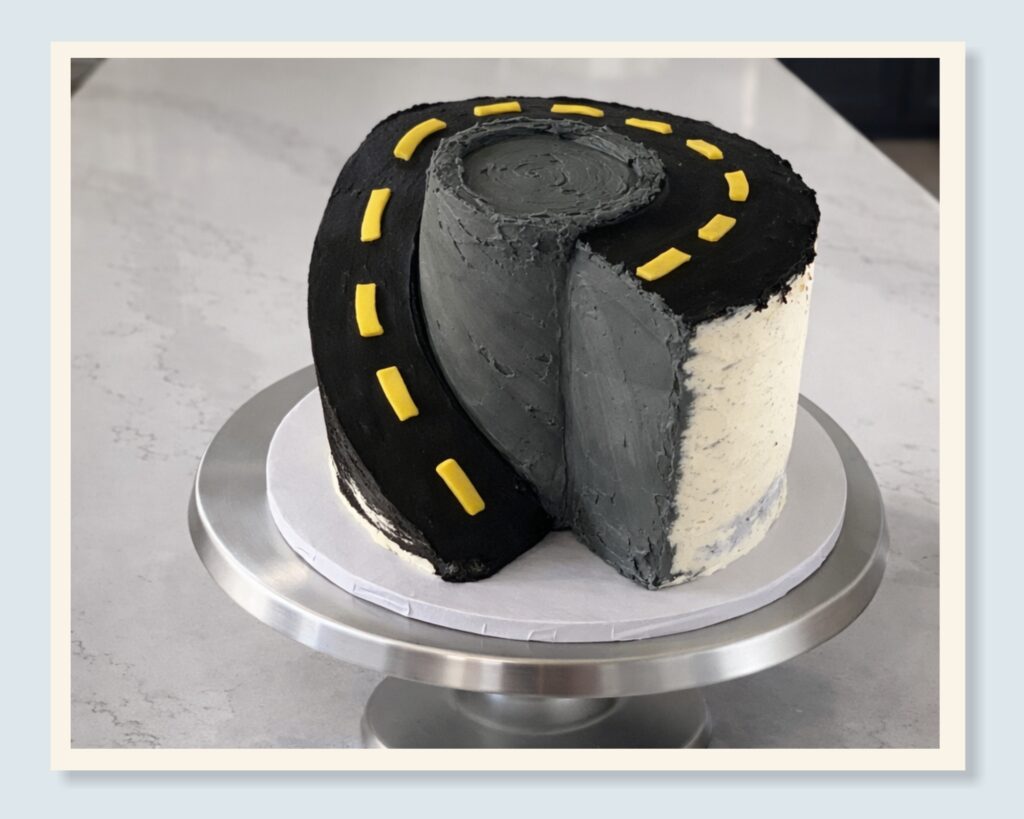
The middle section wasn’t decorative.
It was there for:
- stability
- serving volume
- and balance
It gave the structure something to work around — and just as importantly, something to rest against visually.
There were additional elements in the topper set — including a traffic light — but not everything needs to be used.
It didn’t fit naturally anywhere.
The quality didn’t match the trees and cars.
So it was left off.
That decision is part of the design process too.
Structure Comes First
Before anything was decorated, the structure had to work.
The slope needed to feel believable — even if nothing was truly to scale.
The cars needed to sit securely.
The road needed to read clearly from a distance.
Everything else depended on that.
Placement and Restraint
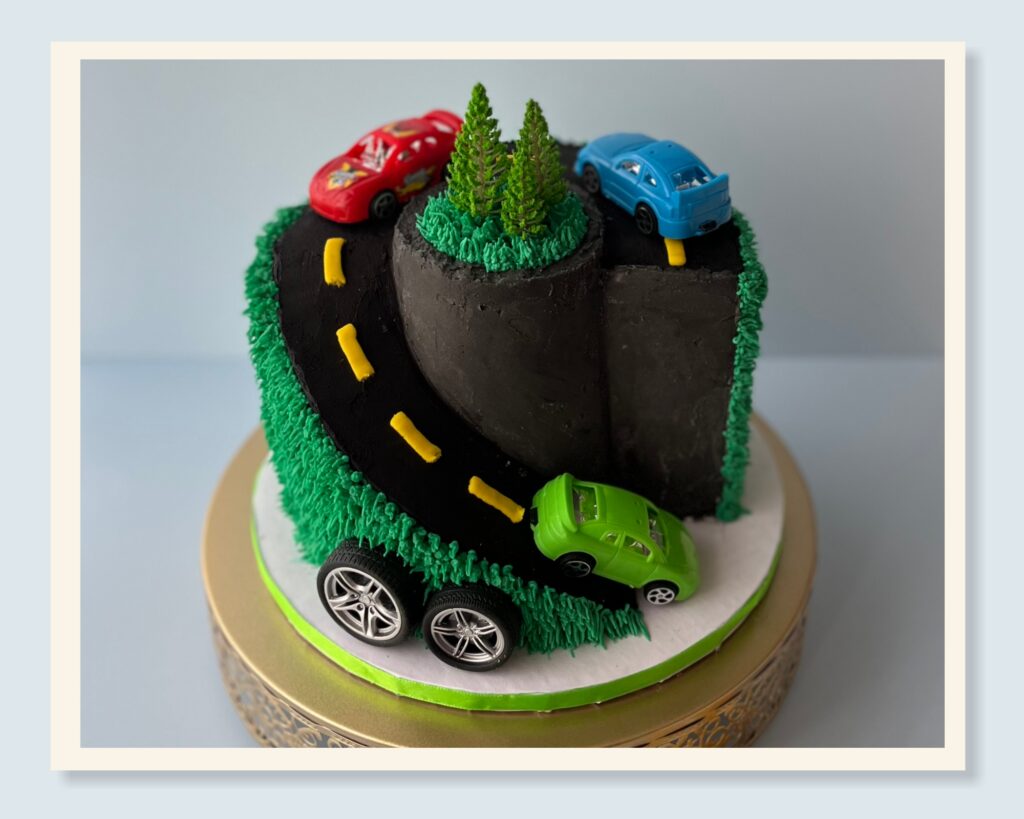
The trees were placed intentionally — not just for decoration, but to provide vertical support for the greeting topper.
The cars themselves were not fixed in place.
I provided a suggested layout, but the parents chose their final placement.
Because of that, the design needed to remain balanced no matter where they ended up.
This is another layer of the process:
Designing something that still works, even when parts of it are out of your control.
Colour and Finish
The final step brought it to life.
The deep black road against the bright, vibrant green gave the cake its energy.
Everything started to read clearly.
It felt complete.
Knowing When to Stop
That’s the part that’s hardest to define — and the easiest to overlook.
I don’t stop when everything is used.
I don’t stop when everything is filled.
I stop when it works.
Sometimes that comes easily.
Sometimes it doesn’t.
This one flowed.
And when it did, there was no need to add anything more.
A Final Thought
A cake design works when the structure supports the idea — and nothing is added that doesn’t belong.
Leave a Reply
It is my dream to bring the boutique experience to Swift Current—an indulgence typically found only after a long drive to a larger centre.
Whether it is a couple choosing a wedding cake or a partner selecting a box of chocolates for their loved one, I want each client to feel pampered to a moment of bliss where they experience a celebration of craftsmanship and luxury in every bite.


Be the first to comment